How Often Should You Test HbA1c If You Have Prediabetes?
A prediabetes diagnosis isn't a one-time event to file away — it's a signal to monitor. Here's a practical cadence for retesting HbA1c.
A prediabetes result (typically HbA1c between 5.7% and 6.4%) is often treated as a one-off scare rather than an ongoing thing to track — but that's exactly the window where monitoring can change the trajectory.
Why the testing cadence matters here specifically
HbA1c reflects roughly three months of average blood sugar, which sets a natural floor on how often retesting is actually informative — testing again after four weeks won't show much movement, because most of the red blood cells being measured haven't turned over yet.
A reasonable general cadence
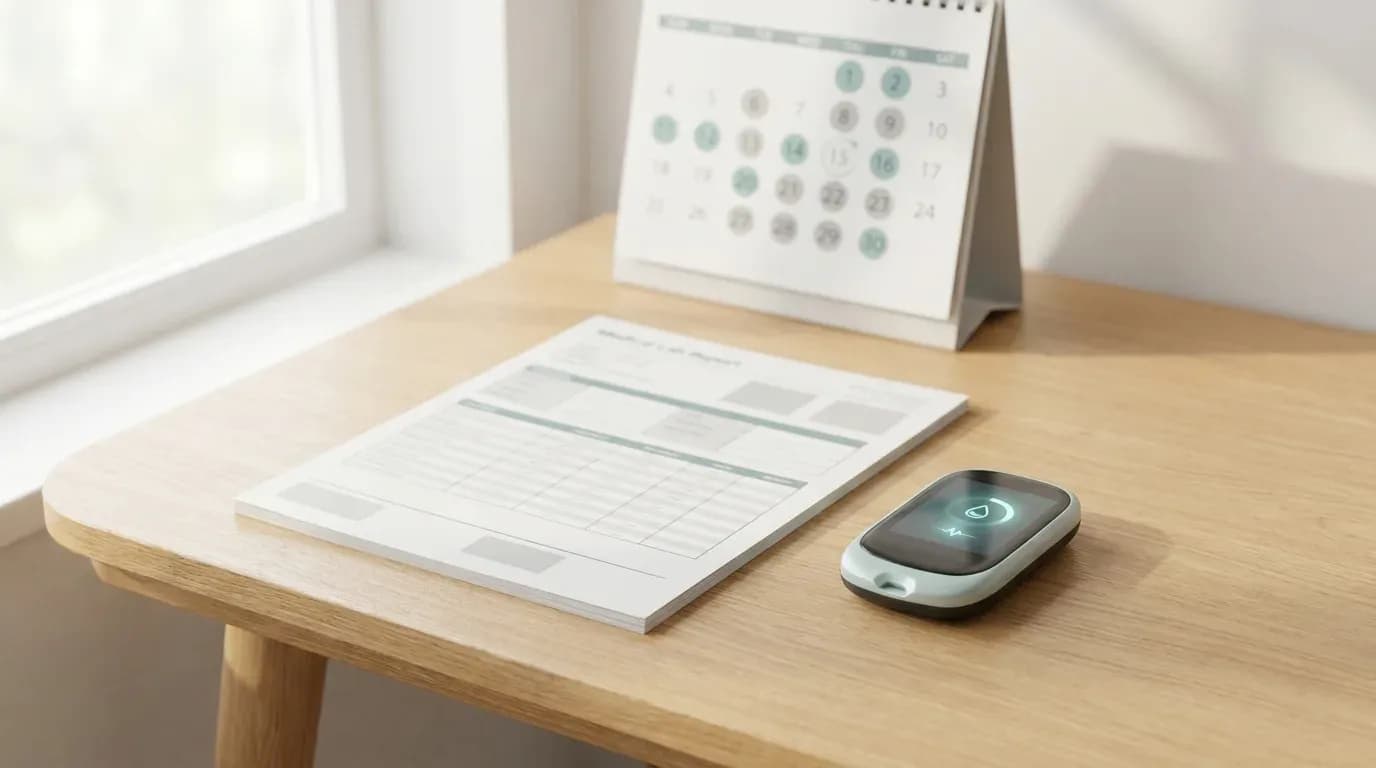
Many clinicians retest HbA1c every 3 to 6 months for someone in the prediabetes range, adjusting based on other risk factors like family history, weight changes, or lifestyle changes already underway. This isn't universal medical guidance — your own doctor's recommendation should take priority — but it's a useful default to ask about.
What a small change actually means
- A drop from 6.2% to 5.9% is a meaningful, genuine improvement — not noise.
- A rise from 5.8% to 6.1% crossing a category boundary is worth a conversation, even though it's a small absolute change.
- HbA1c naturally fluctuates slightly test to test; a single 0.1% change either direction usually isn't significant on its own.
Beyond just retesting
Retesting only tells you whether something is working — it doesn't replace pairing the number with what actually changed in diet, activity, sleep or weight in between tests. The number and the context together are more useful than the number alone.
This is general health information, not medical advice. Always talk to a qualified healthcare professional about your own results.